
If a business in Northern Ireland wants predictable growth in 2026, it needs predictable pipeline. Predictable pipeline only comes from a lead generation system that captures real buying intent, converts trust, and turns enquiries into revenue.
Henkan is a Northern Ireland–based B2B growth partner. Through award-winning lead generation work across multiple sectors, the team has seen the same pattern repeatedly, most SMEs do not struggle because of a lack of traffic, they struggle because they do not have a system that turns interest into qualified sales conversations.
This guide explains how B2B lead generation actually works in Northern Ireland, what channels and offers convert, how to measure performance properly, and how to build a scalable engine that still works as competition increases in 2026.
What B2B Lead Generation in Northern Ireland Actually Means
B2B lead generation only works when everyone agrees on what a “lead” actually is. Without that clarity, businesses optimise for volume instead of revenue and then wonder why sales teams reject enquiries.
In practical terms, lead generation is the process of creating qualified opportunities from your target market, not just form fills or inbox traffic.
There are three levels most SMEs confuse. An enquiry is simply someone making contact. A marketing-qualified lead is someone who fits your target profile and shows meaningful intent. A sales-qualified lead is someone sales has validated as worth pursuing now.
The most common objection is that a lead is anyone who gets in touch. In reality, treating every enquiry as equal inflates reporting, frustrates sales, and hides the true performance of marketing. Clear qualification criteria are not a luxury. They are the foundation of ROI.
Why Lead Generation Is a Strategic Growth Lever for Northern Ireland SMEs
Lead generation matters because it replaces uncertainty with predictability. Without it, growth depends on referrals, timing, and the availability of the founder or senior team.
For many Northern Ireland SMEs, referrals and word of mouth have historically carried the business. The issue is that referrals are impossible to forecast, difficult to scale, and tend to dry up precisely when growth is needed most.
A consistent lead generation engine enables reliable pipeline forecasting, reduces pressure to discount, lowers dependency on founder-led selling, improves hiring and capacity planning, and increases long-term business value.
The most common objection is cost. The real cost is operating without visibility into where the next quarter’s revenue is coming from.
How B2B Buyers in Northern Ireland Find and Choose Suppliers
Most B2B buying journeys start with intent, not inspiration. Buyers are rarely looking to be convinced they have a problem. They are looking for reassurance that they are choosing the right supplier.
In practice, this means three things matter most. High-intent search is the primary entry point. When buyers search terms like “lead generation Northern Ireland” or “B2B marketing agency Belfast”, they are actively shortlisting, not browsing.
Credibility and reassurance are critical. Buyers look for proof that risk is low through case studies, results, awards, a clear process, and familiarity. Reinforcement channels such as LinkedIn, remarketing, and content rarely create demand on their own, but they significantly increase conversion once intent exists.
The mistake many SMEs make is trying to sell too early. In B2B markets, trust is the conversion rate multiplier.
The Most Effective B2B Lead Generation Channels in Northern Ireland
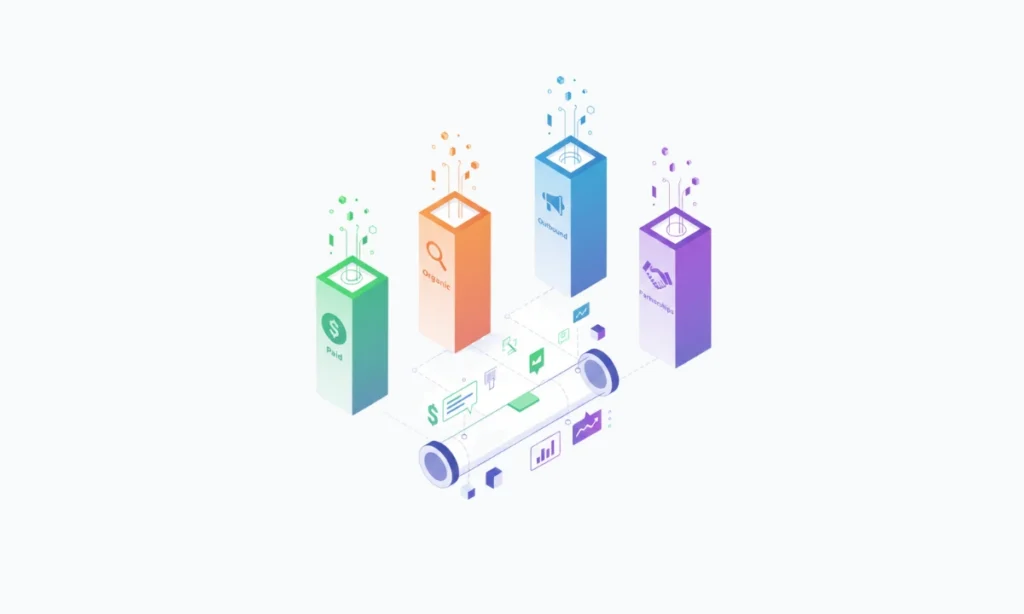
Not all channels play the same role, and treating them as equal wastes budget. Effective strategies assign each channel a clear job.
Google Search is the core demand-capture channel. It reaches buyers who are already looking for a solution. While Search often delivers fewer leads than social channels, those leads are typically further along the buying journey and convert at higher rates.
The usual objection is cost. In practice, higher-intent leads outperform larger volumes of low-intent enquiries that sales teams struggle to progress.
LinkedIn works best as a precision and reinforcement channel. It allows targeting by job title, seniority, and company size, but it only performs when paired with a strong offer and clear messaging. Without that, it becomes an expensive awareness exercise.
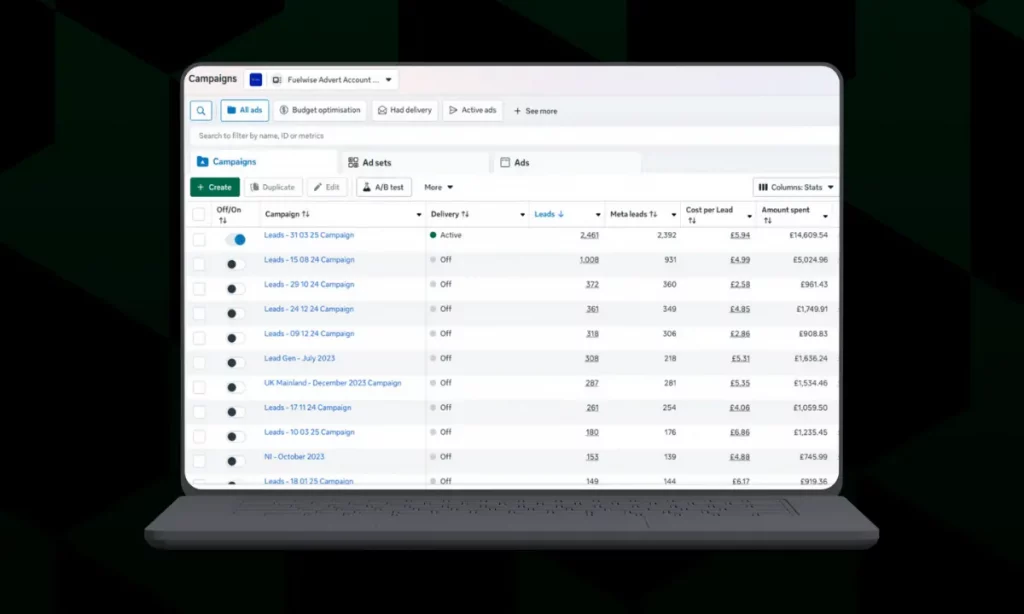
Meta (Facebook and Instagram) is effective for creating and capturing demand among audiences who may not be actively searching yet. With strong lead generation formats such as native lead forms, conversion campaigns, and retargeting, Meta allows businesses to reach decision-makers at scale and re-engage warm prospects. While leads from Meta are typically earlier in the buying journey than Search, they can be generated at lower cost and converted effectively when paired with clear offers and structured follow-up.
TikTok excels at attention and reach, particularly for educating and warming up potential buyers through short-form video. Its lead generation ads and website conversion campaigns make it possible to capture interest at scale, especially when messaging focuses on problems and outcomes rather than services. TikTok leads tend to be top-of-funnel, but when combined with retargeting and email nurturing, the platform can significantly increase overall lead volume and reduce reliance on high-intent channels alone.
SEO and content support long-term inbound demand. They take longer to produce results but compound over time and strengthen credibility for competitive commercial searches.
Retargeting, including Performance Max, plays a supporting role. Its job is to shorten decision time by reinforcing trust, not to replace intent-based acquisition.
Effective lead generation is not about being everywhere. It is about aligning each channel to its role and measuring success by pipeline quality rather than activity.
Structuring Lead Generation Offers That Convert
Traffic does not convert, offers do. One of the biggest conversion leaks in B2B lead generation is sending high-intent traffic to vague or high-commitment calls to action.
Generic “Contact Us” pages underperform because they create uncertainty. Buyers do not know what happens next, how much time it will take, or whether they will be pressured.
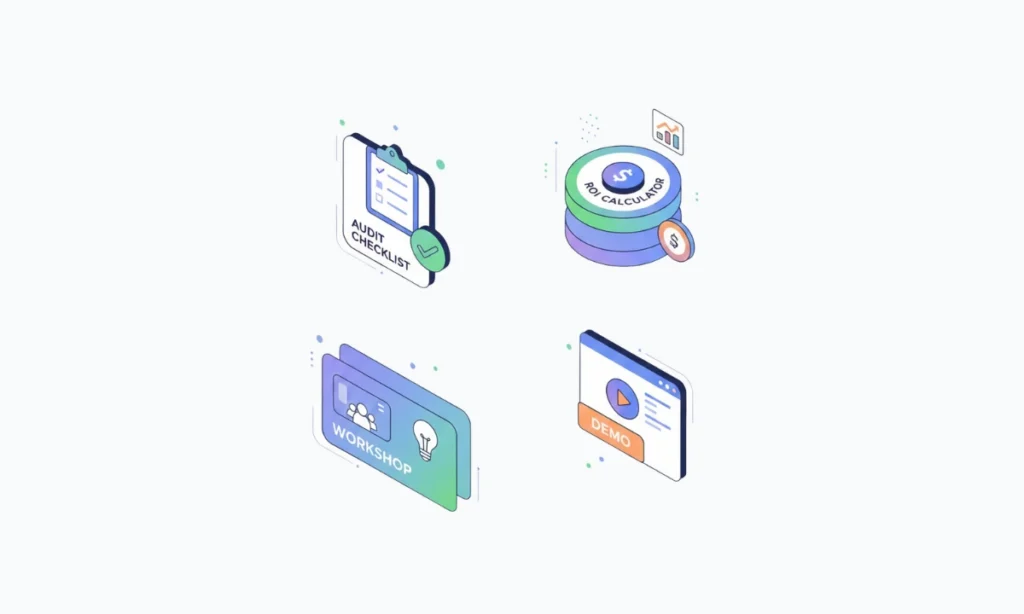
High-performing B2B offers reduce perceived risk and increase clarity. Examples include audits or reviews with a defined outcome, short strategy calls with clear agendas, demos or walkthroughs where a system is involved, and industry-specific assessments.
The common concern is lead quality. In reality, strong offers filter out poor-fit prospects while increasing conversion among the right ones. Specificity converts. Vague offers repel serious buyers.
Messaging Frameworks That Improve B2B Conversion Rates
Most B2B messaging fails because it focuses on features instead of risk reduction. Buyers want to know that you understand their problem, can deliver outcomes, and will not waste their time.
Effective messaging follows a clear structure. Start with problem clarity to show understanding. Focus on outcomes and how they are measured. Support claims with proof such as results or process. Reduce risk by explaining what happens next and why it is safe. Finish with one clear next step.
A high-converting landing page reflects this logic through an outcome-driven headline, a reassurance-led subheading, a clear offer, proof and credibility, a simple process, objections handled, and a repeated, unambiguous call to action.
Good messaging reassures decisively rather than persuading aggressively.
Henkan’s Award-Winning Approach to Lead Generation in Northern Ireland
Henkan builds lead generation systems designed to be repeatable, measurable, and scalable rather than campaign-led experiments.
The process starts with commercial alignment. That means defining what a qualified lead looks like, what it is worth, and what success means beyond volume. Tracking and visibility are then put in place so every lead source, action, and outcome can be measured honestly.
From there, conversion-focused funnels are designed around clear offers, high-intent landing pages, and journeys that move prospects toward sales conversations. Campaigns are executed across the right channels, primarily Search supported by LinkedIn, retargeting, and inbound, with continuous optimisation based on pipeline outcomes rather than surface metrics.
Reporting focuses on what decision-makers actually need to see: pipeline created, cost per opportunity, and revenue impact.

Proven B2B Lead Generation Results from Northern Ireland Businesses
Through its lead generation work, Henkan has delivered measurable growth across multiple sectors.
Nico Garden Studios achieved a 180 percent increase in qualified leads within three months by focusing on high-intent demand capture and conversion-led landing pages.
Fuelwise sustained 150 percent year-on-year lead growth over four consecutive years, demonstrating what is possible when lead generation is treated as a system rather than a series of campaigns.
TeamFeePay delivered nine times return on ad spend within six months, alongside a 50 percent reduction in cost per lead and a doubling of lead volume, driven by tighter offer alignment and funnel optimisation.
These results matter because they are repeatable, not one-offs.

Measuring Success: Lead Generation Benchmarks and KPIs
If you measure the wrong thing, you optimise the wrong thing. Effective lead generation measurement follows the path from click to revenue.
Key metrics that actually matter include cost per qualified lead, lead-to-meeting conversion rate, meeting-to-opportunity conversion rate, opportunity value created, close rate, and pipeline velocity.
Surface-level metrics like clicks or raw lead volume are only useful in context. High-quality lead generation often looks average on paper until revenue outcomes are considered.
Building a Sustainable Lead Generation Engine in 2026
A scalable lead generation engine follows a clear sequence. Define your ideal customer and qualification criteria. Build one strong, specific offer. Create a high-converting landing page. Capture intent through Search. Reinforce trust through retargeting and LinkedIn. Build inbound demand through SEO. Nurture leads systematically. Measure pipeline outcomes. Scale what works and cut what does not.
This approach turns lead generation from a gamble into an asset.
Common B2B Lead Generation Mistakes Northern Ireland SMEs Make
The most common failures are not technical, they are strategic.
These include chasing volume instead of quality, launching campaigns without a defined offer, relying on referrals alone, neglecting follow-up and nurturing, and measuring activity instead of outcomes.
Most lead generation problems are not marketing problems. They are decision problems.
Choosing a Lead Generation Partner in Northern Ireland
For SMEs actively searching for lead generation Northern Ireland, the decision is not about channels, it is about capability.
The right partner should demonstrate a clear and repeatable process, proven results, transparency in reporting, understanding of B2B sales cycles, and a focus on conversion rather than traffic.
Henkan supports businesses at different growth stages, from early pipeline build to long-term scale, with an emphasis on sustainable, commercially aligned lead generation.