
As website designers in Northern Ireland, we have seen many websites that are treated as digital brochures rather than commercial tools.
The reality is simple: if a website does not support lead generation, credibility, and conversion, it is not doing its job.
Henkan is a Northern Ireland–based B2B growth partner. Through years of designing and rebuilding websites across multiple sectors, the team has seen the same issue repeatedly. Businesses do not struggle because they have a “bad-looking” website. They struggle because their website is not designed to support how buyers actually make decisions.
This guide explains what website design in Northern Ireland should achieve in 2026, what separates high-performing sites from average ones, how to measure success, and how SMEs can build websites that actively support growth.
What Website Design Actually Means
Website design is not about aesthetics alone. Its primary role is to communicate value clearly, build trust quickly, and guide visitors toward a meaningful next step.
For SMEs, effective website design means aligning structure, content, and user experience with real buyer intent. That includes clarity around services, who the business is for, why it is credible, and how to get in touch without friction.
A common misconception is that website design is finished once a site “looks good”. In reality, design that does not consider conversion, usability, and performance rarely delivers commercial value.
Good website design sits at the intersection of branding, user experience, and lead generation.
Why Website Design Is a Strategic Investment for Northern Ireland SMEs
A website is often the highest-leverage marketing asset an SME owns. It supports every other channel, from SEO and paid search to social media and email.
When designed properly, a website improves conversion rates, shortens sales cycles, and increases trust before a sales conversation even begins. When designed poorly, it leaks opportunity regardless of how much traffic is driven to it.
The common objection is cost. But the real cost is investing in traffic while sending it to a site that does not convert.
For Northern Ireland SMEs, a well-designed website provides clarity in competitive markets and levels the playing field against larger UK and international competitors.
How Buyers Use Websites When Choosing a Supplier
Most buyers arrive on a website with a single question in mind: “Is this business right for me?”
They scan rather than read. They look for reassurance, not sales pressure. They want to understand what you do, who you do it for, and whether you are credible, quickly.
In practice, this means buyers focus on headlines, navigation, proof, and clarity of messaging. Case studies, testimonials, service explanations, and simple calls to action matter far more than visual flourishes.
The mistake many SMEs make is designing for themselves rather than for the buyer. Effective website design reflects how users behave, not how businesses want to present themselves.
Core Elements of High-Performing Website Design in 2026
High-performing websites share common characteristics, regardless of industry.
Clear structure ensures visitors can find what they need without friction. Strong messaging communicates value in plain language rather than jargon. Visual design supports readability and hierarchy rather than distracting from it.
Performance is critical. Fast load times, mobile optimisation, and accessibility are no longer optional. Search engines and users both penalise poor performance.
Conversion elements such as clear calls to action, intuitive forms, and logical user journeys ensure traffic turns into enquiries.
The objection is often complexity. In reality, the most effective websites are usually the simplest.
Website Design and SEO: Why They Must Work Together
Website design and SEO are inseparable. Design decisions directly affect crawlability, page speed, user engagement, and conversion rates.
For businesses targeting searches such as “website design Northern Ireland” or “web design agency Belfast”, site structure, internal linking, and page clarity play a significant role in organic performance.
A visually impressive website that ignores SEO fundamentals often underperforms. Likewise, an SEO-focused site with poor user experience struggles to convert.
The strongest results come when design, content, and SEO are planned together from the start.
Local Website Design for Northern Ireland Businesses
For many SMEs, location matters. Website design should reinforce local relevance and credibility without feeling generic.
This includes clear service area messaging, local proof, and content that reflects the market being served. Pages optimised for searches like “website design Belfast” or “web designers Northern Ireland” benefit from clarity around location, services, and audience.
Local relevance is not about repeating place names excessively. It is about demonstrating familiarity and trust within the market.
How Henkan Approaches Website Design for Northern Ireland SMEs
Henkan approaches website design as a joint creative and commercial project.
The process begins with understanding business goals, target customers, and how the website will be used within the wider marketing ecosystem. Structure and messaging are prioritised before visual design.
Websites are designed to support SEO, paid traffic, and lead generation from day one. Conversion paths are planned deliberately, and performance considerations are built in rather than added later.
Design decisions are measured by how well they support clarity, trust, and action.
Website Design Success Stories from Northern Ireland Businesses
Strong website design creates a foundation for growth across multiple channels.
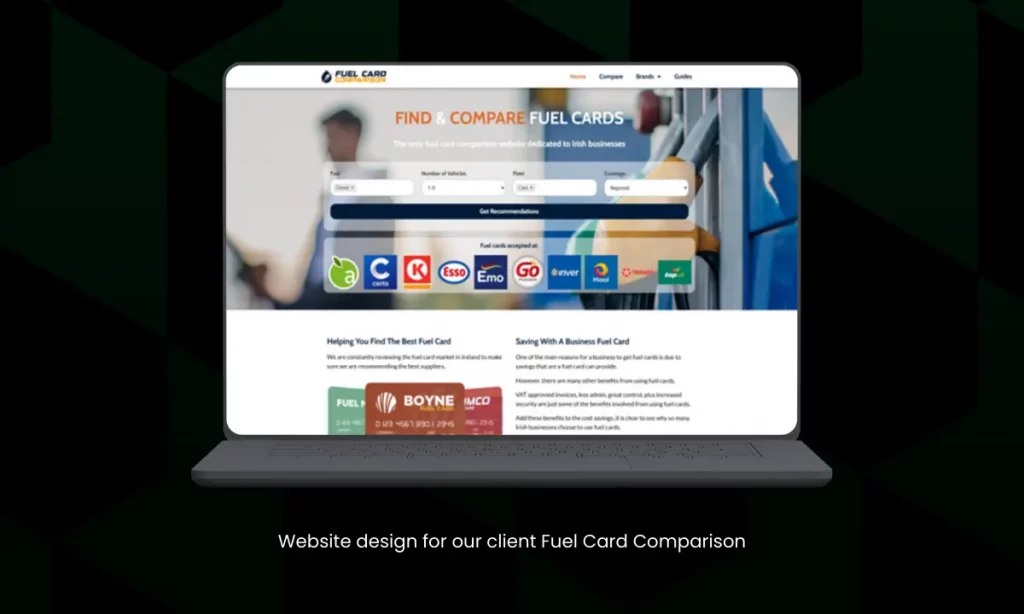
For Fuel Card Comparison, a new website was designed with clear structure, strong technical foundations, and commercial intent at its core. This created a platform built for ongoing organic growth rather than short-term traffic spikes.
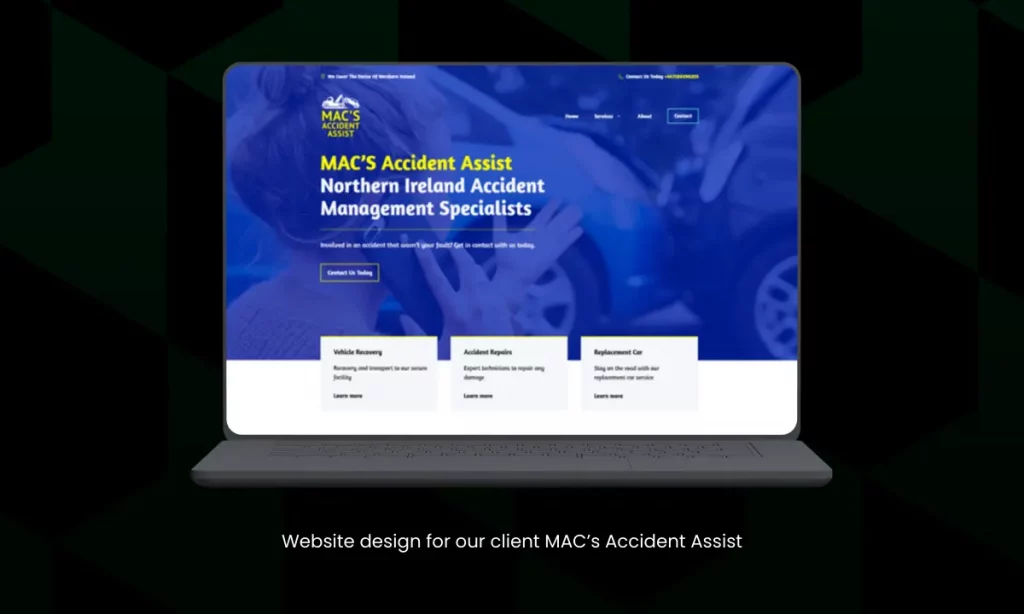
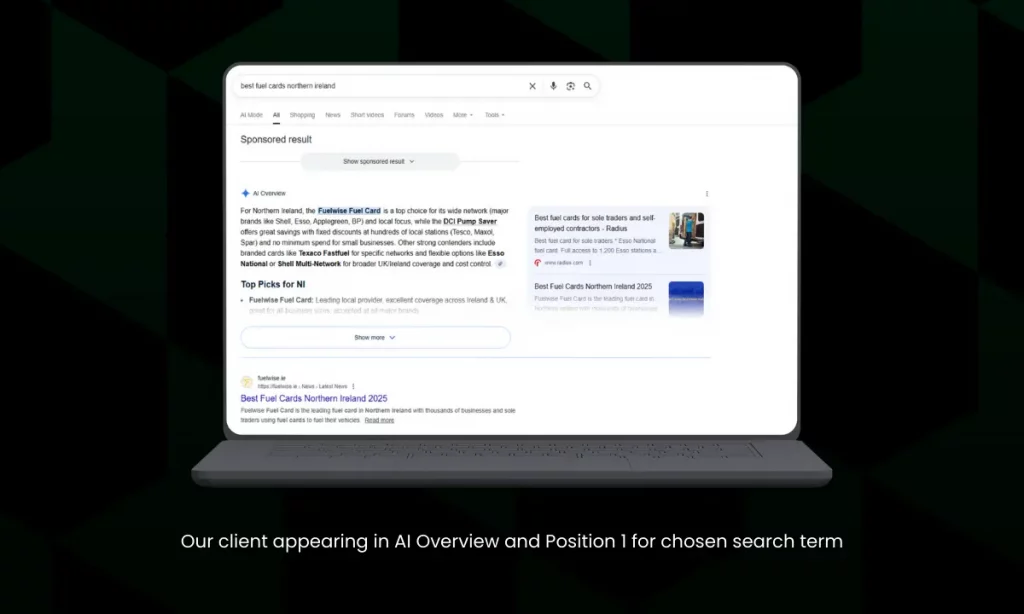
MAC’s Accident Assist launched a new website designed to support both SEO and lead generation. Clear service pages, fast performance, and conversion-focused layouts contributed to first-page rankings on a new domain.
These results highlight the role of website design as an enabler rather than a standalone output.
Measuring Website Design Success Properly
Website success should be measured by outcomes, not opinions.
Key indicators include conversion rates, enquiry quality, engagement metrics, and how effectively the site supports SEO and paid campaigns. A website that looks good but fails to convert is underperforming.
The most common mistake is treating a website launch as the end point. In reality, launch is the starting line.
Common Website Design Mistakes Northern Ireland SMEs Make
Most website failures are strategic rather than aesthetic.
Common issues include unclear messaging, prioritising visuals over usability, ignoring mobile performance, weak calls to action, and designing without considering how traffic will arrive and convert.
These mistakes often result in redesigns that look different but perform the same.
Choosing a Website Design Partner in Northern Ireland
For businesses searching for “website design Northern Ireland”, the right partner should demonstrate more than design skill.
They should understand SEO, conversion, user behaviour, and how a website fits into a wider growth strategy. Transparency around process and outcomes matters more than subjective design taste.
Henkan supports SMEs at different growth stages, designing websites that align with lead generation, SEO, and long-term scalability.
Final Thought
Website design is no longer a branding exercise alone. In 2026, it is a commercial asset that should support every growth channel a business relies on.
The question is not whether a business needs a new website. It is whether that website is designed to do real work.